Are Your Core Beliefs Actually True? The Question Most Women Never Stop to Ask
You've built a good life. On paper, it all checks out. But somewhere underneath the busy and the fine and the keeping it together, there's a voice that keeps asking — is this actually it?
There's a good chance the answer has something to do with what you believe about yourself. Not the thoughts you're aware of. The deeper ones — the ones you've been carrying so long you forgot they were even there.
In this episode, I'm breaking down what core beliefs actually are, how they quietly run your choices, your relationships, and your sense of self — and I'm giving you a real, usable process to start examining the ones that might be keeping you stuck.
I also share some pretty personal stories about the beliefs I had to unpack alone in Bali before my whole life opened up. This one goes deep. Grab something warm to drink and press play.
In this episode you'll discover:
Why your core beliefs are not facts — even though your brain treats them like they are
How beliefs form in childhood and follow you into adulthood without an invitation
Why even your body responds to what you believe (the stress study that will blow your mind)
A 3-step process to identify your limiting beliefs and gently begin to question them
Watch Video Now
Listen to the Episode on A Little More You Podcast
Now, I'd love to hear from you.
What belief did you recognize in yourself as you listened? Maybe it was one you've never said out loud before. Maybe it was one you've been carrying since you were a kid and just now realized it's still in the driver's seat.
Share as much detail as you're comfortable with in the comments below. Real stories from real women are what make this space what it is. Your honesty might be the exact thing someone else needs to read today — the thing that helps her finally name what she's been feeling but couldn't find the words for.
Please drop your thoughts directly in the comments. Links to other posts or videos will be removed — this space is for connection, not promotion.
Thank you, from the bottom of my heart, for being here and for adding your voice to this community. You make it one of the most honest and supportive corners of the internet.
With so much love,
Kendra 💜
-
[00:00:00] Hey there. Welcome to a Little More You podcast. This space is for the woman who is done being who she's supposed to be and ready to step into her own truth. Your life might look great on paper, but you've done all the things that society says you should and you still feel like something's missing.
And that something, my dear, is you. This is where we make space for you to listen to your own inner wisdom and bring a little more you into the world. I'm Kendra, your host, and I'm honored to walk this path with you. Today we're gonna talk about beliefs. We're gonna talk about what they are, why it's important for us to know what they are and how they impact our lives.
How they develop, how we develop them. And then I'll give you just a few tips for you to think about in identifying your own core beliefs and how to potentially challenge them if you are up for it. So let's [00:01:00] just dive right in with what are beliefs and why are they important? So core beliefs are. They are our most deeply held assumptions about what's true for ourselves and the world around us, which means, and I'll highlight the word assumptions here, they're not fact and they are not necessarily truths.
They are the root of our behavior chain. So they are the foundation of how we show up in the world and how we act and interact with other people. What do I mean by behavior chain? Let me give you, a little bit an idea of what I mean when I say behavior chain.
Behavior chain is basically. Your beliefs influence your values, what you think, how you feel, and then ultimately how you act and interact with other people. So what you believe literally [00:02:00] is the foundation of how you end up living your life throughout your life. And if we don't take the time to examine our beliefs or question our beliefs or challenge our beliefs.
We can end up living an entire life around things that aren't necessarily true or fact, but we think they are. So I'm gonna make a really bold statement here and say that nothing in the work that I do with women around living their truest and authentic life, nothing matters more than your ability to observe and better understand your core beliefs.
Maybe question them, consider questioning them. I'll give you an example of how this behavior chain works. So let's say you, learned as a young child that money [00:03:00] was the root of all evil and that you should stay humble, and that you shouldn't be greedy or want money. If that was the case, you may go about your life.
Valuing experiences, people in things that don't make you money. You might however, then devalue your own worth or work in exchange for money. Your thoughts and feelings about money may be things like, people who have money are bad or I can't be friends with that person
because they have money and. That means that they have different values than me. Or maybe you even limit yourself to, I don't wanna have the house or the car or the experiences or the first class flights, because if I did, that would mean I have money and I know money is bad. So all of that drives your behavior and how you show up in life.
Maybe you don't [00:04:00] negotiate for higher salaries, or maybe you actively sabotage your ability to get a promotion. You might work fewer hours because you think the time outside of work is more valuable to you. .
These are all ways you show up in life, and it's all determined by what you believe. And the thing about this behavior chain that you need to know is that it's totally automatic. It is unconscious, . It happens in the blink of an eye. means that most of the time we are not aware of how our beliefs impact how we behave because it's just not a conscious thing
we don't sit and go, oh, well I chose to do this, or I made that decision because of what I believed. It actually takes conscious effort. To examine and pay attention to how our beliefs are impacting our lives, which is what we're gonna do today, and why , I think [00:05:00] it is so important and foundational to living our most authentic life.
So the first thing we've gotta do is we gotta think about how these things are formed. I'm a why person. Anytime that people explain something to me, I'm like, why? So I do that for you on this podcast because I am that way. I wanna know why. How are they formed?
Why do beliefs impact our behaviors? Why is it all automatic? Why does this all happen? So let's get into it. our core beliefs are really shaped by the fact that we're human, our human brain requires us to have these core beliefs, and they're significantly influenced by the environment we grow up in.
Okay, so. Most of our core beliefs are formed in childhood. Surprise, surprise. And they're either learned or they're created. If they're taught to us, they're typically taught to us from a young age, and they're reinforced over years and years and years and [00:06:00] years.
Like the example of, money is bad or money is evil. That's something that was taught to me as a child and reinforced over years and years and years. They can range, these beliefs can range anywhere from what you should wear and how you should look and how you should present yourself to moral issues like human rights or political viewpoints.
And as children, we are just little sponges. Taking it all in, taking in all those messages from our family, our friends, our culture, our religions, all the things. And we soak it all in. And so we learn particular beliefs, and then some of our beliefs are created. We actually create them, and typically they're created out of a self protection mechanism.
If, for example, we're in a place where we feel a little bit unsafe, we might make up beliefs and believe them to be true because they keep us safer. Things like, I'll give you a [00:07:00] random example. Things like if you're in middle school, 'cause middle school's hard, let's be honest. You build a story that says it's just easier for me to fit in than it is for me to go off on my own and be my true self and live my true life.
When you're in middle school and that age group, we learn that it's better to fit in than it is to be our true selves. Unless somebody is teaching us something different. But culturally, generally in middle school, that is something that happens quite a bit. And so we create these beliefs out of self-protection.
So we're taught certain beliefs and we create certain beliefs. And the thing about it in our childhood, and the thing about it is, is that if we don't take the time to do this work right here, right now, that we're doing right here. We end up getting older and holding onto those old beliefs that no longer serve us anymore, and [00:08:00] we have to pause for a moment and consider , if those beliefs are still really true or ever really were true.
Which is what we're gonna do here today. So let's talk about the brain just a little bit. 'cause I said that, who we are as humans, that we have these core beliefs. The human brain is this super amazing thing. It it helps us process the world around us and it's constantly trying to keep us safe and help us understand the information that's coming at us.
But our brain does have just a finite amount of space to consume information. So your brain is built. To organize things, to group things in categories, to put like things with like things. And when that happens, it allows your brain to pack in as much information as possible. But there is a downfall to that because [00:09:00] we miss information.
It filters information out. That does not necessarily align with the categories and groups IE our beliefs about what is true. So we only perceive a fraction amount of the information that's buzzing around us, and we tend to pay attention to the things that reinforce our beliefs. Our brain prioritizes information based on reinforcing what we know or assume to be true.
So let's talk about this for just one second, because we know many of us, maybe you don't, I don't know. technology, ai, all of these system marketing these days, advertising these days, all of it is filtered and now to a certain extent personalized to reinforce your beliefs. Here's the wild thing. So is your [00:10:00] brain.
They're complimentary of each other. It's no wonder technology works so well because it's mirroring what our brain does automatically already. So I'll give you just a little quote from Four Agreements that just kind of reinforces this, messaging Four Agreements written by Don Miguel Ruiz.
We only see what we wanna see. We only hear what we wanna hear. Our belief system is just a mirror that only shows us what we believe and if our beliefs were created. So end quote there, my additional add here. And if our beliefs were created in our childhood and we are still carrying that around with us.
In our adulthood, how does that impact how we show up with ourselves, with our friends, with our families, with our communities? And is it time to ponder question, challenge [00:11:00] our beliefs?
So we've talked about what beliefs are and why they're important. Let's talk a little bit about how they impact, not just how we show up in the world, but how they impact our physical body. , just gonna kind of summarize because I think this is the best example I have ever heard for how beliefs impact our physical body.
But there was a TED Talk done by Kelly McGonigal, who is a health psychologist, and you can go, Google that if you want. She talks in that about a study that was conducted in the US with 30,000 people where they found. That people who experienced a lot of stress in the previous year had a 43% increase risk of dying if they also believed that stress was harmful to your health.
So the people who had a really stressful year last year, [00:12:00] but believe that stress was good for them. They were no less likely to die. And in fact, they had the lowest risk of dying than anyone in the study, even the people who had relatively little stress. So we are going around here all day long and our society and talking about how we need to reduce stress.
We need to reduce stress, and God knows we do, however. This goes back to my original big, bold statement here. I believe that our beliefs, I am making a grand assumption here, , that our beliefs matter more than our stress level.
So the moral to this story is we create our beliefs, we learn our beliefs. They are not necessarily true. We don't have to carry them through a lifetime.
And some of our beliefs maybe, maybe just maybe holding us [00:13:00] back from living the life that is truly aligned with our authentic self. And if that is the case, those are called limiting beliefs. And here's some examples of what those might feel like. If these resonate with you,
i'd love for you to comment below. Let me know what resonates with you. I'm not smart enough. I'm a failure. I don't have enough time to do this thing. I can't be my real self. I'll be judged. I'm fine. Everything's fine. The world is fine. I just gotta suck it up and keep going. It's not possible for me to live my dream life.
That's something else that somebody else gets, but it's not something I get. It's too late. I can't pursue my dreams or it's always gonna feel this way. There's nothing I can do. I can't change it. I just have to keep going. These are just some examples. I mean, everybody has different ones. I can give you another example from a client.
Recently she had this belief [00:14:00] that. She has to be consistent every day order to make progress, . She had a, long held belief that she had to keep doing and she had to keep being consistent and disciplined. These were things that were taught to her as a child,
These are all beliefs that I have worked with women to question and or reconsider as we work together, if that's something that you are interested in working together, a great way to get started is I have a 10 Day True You Reset, which is just, it's free. It's totally free.
click in the link below to get that. but it's a great way to just get started in this work and just get thinking about questioning your beliefs and resetting towards your true self and your most authentic self. Here's a, a personal example I'll give you of a belief that I held for a really long time.
[00:15:00] I was taught as a young child, I believed that I was put here on this earth to have kids. That was what was taught to me. My self-worth was wrapped up in this idea of having a kid. And at 34 years old, I was pregnant for the first time, and after 40 weeks and five days, my daughter ended up being stillborn.
So I was, as you can imagine, crushed. But then we faced infertility. We had a miscarriage, , I had medical things going on. Having a kid was gonna be hard for us and we were gonna have to make a decision at some point if we were gonna go towards this IVF route. And here I am utterly wrapped up in this belief that my existence was tied to the ability to have a child.
So I had to go off on my own for a little bit and examine that belief and [00:16:00] question that belief because what if I never had a biological child? What did that mean about me and who I am?
I did that and funny story, I came back and seven weeks later got pregnant with my son. Totally, naturally, totally. Normally he's fine. He's great. He's a good, good kid. but the, moral of the story here is that that belief and story that I had about my worth on this earth was. To a certain extent limiting my ability not just to have children.
I don't know that it was impacting my ability to have children. It might have been because that shit impacts our physical bodies, but it was also impacting my ability to show up in the rest of my life and examining that belief sent me on a path to do this work. The work I'm doing here to be on this podcast today because my worth isn't completely wrapped up [00:17:00] in having children.
There's certainly lovely benefits and I feel joy and gratitude every day that my son exists, and yet my worth is not completely wrapped up in him anymore.
How do you, if you wanted to, how do you start, examining some of your beliefs? I'll give you kind of a, a a three part process here.
Let me tell you the work that I did to get to that place where I challenged my belief and changed my story. The first thing that I would recommend is to grab a pen and paper and do some free writing, just. Don't edit yourself. Put on some good music. Give yourself 20, 30 minutes and just brain dump all of your beliefs.
What do you believe about yourself, about others, about the world around you? Anything you feel strongly about? You can group 'em into categories if it's helpful. I [00:18:00] like to group things in categories ' 'cause our brain does that, but not everybody does. Family, relationship, health, spirituality, whatever you wanna do, whatever makes sense for you.
And then when you're done, you can step away for a little bit and come back later, or come back days later if that's helpful for you. But when you're done without, what you wanna do is just look over your list. Think about an area of life that you've been struggling. Highlight any beliefs that you feel like are limiting you and contributing to that struggle.
And then from there, pick one. Start with one. You can do this exercise over and over again with multiple beliefs, but you can start with one and you're gonna challenge it, and here's how you're gonna challenge it. If you're gonna pick a situation where that particular belief showed up. So for me, I literally, after when we were making our decision about IVF, I ran off to Bali and for two weeks all by myself because I [00:19:00] needed to really reconcile this idea of who am I if I don't have a child?
And so you pick a situation, a recent situation where that belief came up. So for me it was. I was struggling to have a child. So the next thing you're gonna do is challenge that core belief, and here's how you do it. You can ask yourself, what evidence is there that this isn't true? are there any facts that would change my mind about this strongly held belief in my situation? I just asked myself Are there any examples out in the world of women being of value and worthy who don't have kids?
And the answer is yes. so being able to provide yourself with some sort of evidence that your belief is not necessarily true.
and then you can ask yourself, is there another belief that feels more true or accurate to me? If that, if I can find evidence [00:20:00] that says that the other is not true or accurate, is there something else that feels more true to me?
I said, this is the type of work that I do with clients all the time. So if you want some help walking through this, go grab that 10 day Tru, you reset. It's a great place to start. It has some of this work in it along with a lot of other things, but some of this work is in that True You reset, it's free.
Go grab it.
As always, when we wrap up this podcast, you don't have to do any of this. It is not required that you take any action on your beliefs. Just notice what resonates with you, what felt true, if anything, and let that linger, let that guide you gently forward. I appreciate you sharing this space with me, and until next time, may your days be guided by your inner wisdom and filled.
With a little more you.
[00:21:00]

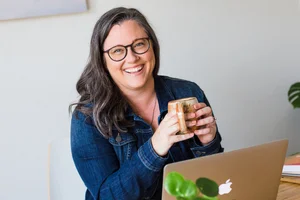
Hi there, I’m Kendra.
I’m a woman forever changed by loss and by the quiet clarity that followed. I walked away from the life I was “supposed” to want and began creating one that felt like home.
Now I work with women who are ready to reclaim their identity, their relational sovereignty, and their soulful leadership. The ones who are done shrinking and ready to start living in their truth.