Beyond Resistance: Why Your New Year’s Resolutions Don't Stick
Change is hard, even when it's a change you actually want.
In today’s episode, I discuss why resistance shows up and explain why it's not your fault...it's how your brain is wired. We’ll explore how cultural expectations, constant mental noise, and survival mode quietly pull us away from ourselves. And more importantly, what happens when you stop pushing against your brain's natural state and start working with it instead.
Are you tired of striving to make positive change in your life and feeling like a failure? Are you ready for a gentler way forward? If so, this is your invitation to soften into change in a way that feels good and to reconnect with the truth that's already inside you.
Watch Video Now
Listen to the Episode on A Little More You Podcast
Now, I’d love to hear from you.
As you reflect on this episode, what felt familiar or stirred something in you? Where do you notice resistance showing up in your own life right now?
If you feel comfortable sharing, I invite you to add your thoughts in the comments. This space is shaped by the voices and lived experiences of the women who gather here, and your reflection may offer insight or reassurance to someone who needs it today.
Please share directly in the comments below. To keep this a calm and supportive space, links to other content will be removed.
Thank you for being here and for contributing your voice to this community. It truly matters.
With appreciation,
Kendra 💜
-
Hey there, I'm Kendra and welcome to our session today. One of the things that you should know about me is that I love all things cozy. So I hope this will feel cozy and casual and informative, but also lovingly supportive. Okay, here we go. Beyond resistance, why change feels hard and how to soften into it. That's what we're going to get into today. So I already said that I'm Kendra. I'm an authentic living coach. And what that means is that I help you create space to hear your own truth and then begin to build a life that's fully aligned to that truth. So what we're going to cover today are three things. First is four reasons why you feel stuck and what's keeping you there. And then we're going to spend some time talking more heartfelt, simple ways for you to move forward with ease and build a life that fits you a little bit better. And lastly, you're going to have an opportunity to choose an anchor for the season ahead. So let's get into it. Do you feel stuck in an endless cycle? So this is just an honest question. If you've ever tried to make changes and found it hard, maybe you've tried to start that new year's resolution, but it didn't stick or you really want to be a runner, but you can't be consistent or you really want to, I don't know, cook good healthy meals every night, but you find it hard. We get stuck in this endless cycle of trying to find different things that will help us feel better. And it's hard. We're going to talk about why it's hard. And I want to take a moment here to just ground us in the fact that it's not your fault. It is actually human nature to resist change. In a previous life, I worked in a corporate environment for 10 years, a decade, doing change management with companies and organizations. And what that means is that I helped them think through the human evolution of change. How do we take humans through these massive and right now, very fast paced change. And what we know from the science is that human nature is to resist change. So understanding how our brain plays into that might help you to maybe give yourself a little bit of grace. So feeling stuck is a normal brain response, not a personal flaw. Once you understand why you feel that way, you can begin to work with it instead of against it. It also maybe helps you let go of some of that negative self-talk of, you know, I can't do the thing. I can't do the thing I wanted to do. I'm having a hard time, you know, changing my life. There's reasons for that. And some of it's your brain and us as humans and how we're wired. So let's talk about why you might feel stuck. There are four different reasons that we're going to talk about that are very grounded in neuroscience. We'll start with cultural, cultural norms. You probably know this, but we're all strongly influenced by our upbringing and the expectations that are set by the people around us when we're kids. And so we're going to talk about how that impacts how we show up in the world in our adult lives. And then the mental overload, we're all being asked to consume and engage with so much right now. And it's taking the humanness out of being human. And we'll talk about what that means in just a little bit. Fear of the unknown when the path ahead feels unclear, our fear convinces us to stay where we are, even if it keeps us stuck because that fear of the unknown is greater than the familiar of what is right now. And then lastly, attention bias, our minds are wired to focus on the threats and negatives, making it harder to notice the opportunities right in front of us. We're going to go through all four of these, but let's just start with cultural norms and expectations. This is the definition of cultural norms according to the American Psychological Association. It's a societal rule, value or standard that delineates an accepted or appropriate behavior within the culture. So things like speed limits are a cultural norm. You're going to be, they're going to be consequences if you break that rule, but they're very complex. They're everywhere. They come from our parents. They come from our siblings, our bosses, our teachers. And nowadays they, to a certain extent, come from the internet and social media and advertisers. And this is how you should behave. And this is what you should drink. And this is what you should in order to feel happy. All the things. Another example would be something like maybe when you were a kid, the expectation was you go to college. It just is what it is. That's the expectation. You don't have another choice. That was kind of my experience. There was no conversation about anything other than naturally you go from high school to college. That's just what you do. That's not necessarily true for every single person on the human race. There are certainly other options out there, but I was not given that it was just, this is what you do. But the establishment of these cultural norms is a critical component to the continuation of cultures. So they're not bad. There's nothing inherently bad about cultural norms. They help with group dynamics, help to create and sustain cultures over time. And that's a good thing. The challenge becomes when group norms aren't in alignment with an individual's values. So this is where the tension lies. You have group culture, which again, isn't a terribly bad thing. It can be, but it's not inherently bad. And you can either choose to stay in that group and conform with those expectations in order to continue to belong to the group. Brene Brown has done quite a bit of research on belonging and what it means to belong to yourself and or to a group culture. And so you have choices. You can choose to stay in that group culture and live by those expectations or you have your individual values and those values. You can choose what matters most to you. And if you do, there is the risk of potentially experiencing some negative reinforcement from the group. So like, for example, if I had gone to my parents and said, I'm not going to college, they would probably have been some sort of negative reinforcement in relation to that decision that I was making that was outside the cultural expectation in my home. So when you comply with the behaviors of the group, deep down, there's something that, something inside you that feels uncomfortable. And that's actually called cognitive dissonance. When you begrudgingly go with what's uncomfortable for you because we're either directly told that you have to, or you're told bad things will happen if you don't comply. This, this is true, obviously. And when you're young and you're in high school or middle school and you have these friend groups and these cliques and it's, you know, well, are you going to do this thing for me? And if you're not, I'm going to kind of shun you for the group. So there is this deep rooted sense of wanting to belong to the group, not wanting to be kicked out, not wanting to be made fun of. And when we continue to adhere to those group cultures and those group norms, then we start to erode something within ourselves. This can also show up in our adult life with things like if you don't put in the extra effort, you're not going to get promoted or you're not going to get noticed. And so we stay, we, we stay in these patterns because belonging and acceptance and our potential of negative consequences keep us there. So I'll share a personal story with you real quick. And just before I do, please let me just set the stage for the fact that I am, you know, a white woman living in Southern U S and I only have the perspectives that I have. So take from this story, what you want and leave the rest. So when I was growing up, I was told over and over, don't talk back comes up very vividly in my mind. And what that meant to me and what I was told was that people of authority, people who are older than you know more than you and therefore are more right than you. Let's just go with the word, right. I lived into that story for so many years and they continue to impact me even in my forties after I was born. They continued to impact me even in my forties after going through a struggle with infertility and trigger warning here. My husband and I also experienced the stillbirth of our daughter. And so I had been through some pretty traumatic experiences and we did finally get to a place where we had a beautiful baby boy when he was younger. I was holding him. This was bedtime and I was holding him. him rocking him to sleep. And all I could hear in my head, inside my head, the voice in my head was you need to put him down because he needs to learn how to self soothe before he falls asleep. That is a cultural norm that we have been taught. And I had just been to his doctor's office and I don't remember how it came up, but she said something like, you know, put him down before he falls asleep. And man, my cognitive dissonance, I was, I was crying y'all. I was, um, my value at that moment in my life was an opportunity to be with my son in this beautiful present moment of holding him and rocking him. I was rocking him in my grandmother's rocking chair before he fell asleep. But the stories in my head, my brain really wanted me to continue to respect authority and put him down. So here I was after losing a child, conflicted about wanting to hold one that I actually had. So on that day, I was able to notice and recognize how that cultural norm was impacting me. Even in my forties, I was 40 by then and make a different choice. I gave myself permission to hold onto my baby because that's what I needed in that moment and it felt good and it felt right. And that's what we're going to be doing today is really just thinking through these moments that you might have where choosing your individual values over the group culture might be a value to you. So the next reason that you might feel stuck is the mental load. And we all know this is real. I have a question. Brené Brown. I already mentioned her once, but, um, I love her. So I'll mention her again. Uh, she did a series, a podcast series on living beyond human scale. And it's a good question. In our current world, we are experiencing a lot of impact on our ability as humans to live at scale, to live a full human experience. There are lingering pandemic effects. There are compounding pressures from the modern workplace and workloads and in the office or remote and AI and all these new things that we're having to deal with. There's also digital saturation, which means there's this, I don't know if you feel this, but unrelenting influx of information and information and constant digital engagement. The phone's always there. It's always pinging you. It's always asking for help. Someone on the other side of that phone is always asking for help. And there's economic uncertainty. Volatility is a major cause of mental strain. And there's a consistent link between that economic insecurity and the mental health concerns. So we're just, we're in it, we're in it really deep. And there's a lot to be aware of and how that impacts our ability to move through change. So all of that impacts us because with that much stimulation, we begin to live in what's called survival mode. With all the noise happening, our brains are kind of a beautiful thing. They adapt. When life is too much, we go into default mode, survival mode, reptilian brain, if you want to call it. These are all different terms for this state of survival. And basically what happens when that happens is that we, our brain kicks into like automatic mode. It kicks into routine. It kicks into what, what can we do that we've done before? And we're drifting into this autopilot phase. I have been there so many times in my life where I just feel like I'm just trying to survive the day. These are some examples of how you might feel if you're in that autopilot survival mode. Life feels like a blur. You're less consciously engaged in the present moment. You are living for that next break. I don't know how many times my husband and I said, if we can just get to the weekend, Oh, if we can just get to that next vacation, we'll be okay. That is survival mode. If you're constantly in the get it done mode where you're, you're not enjoying the tasks that you're doing, you're cooking the dinner, but you're not enjoying doing the cooking of dinner. You're in this end of day time warp. You go to bed at night and you're like, damn, what did I do all day? Oh, like, where did my time go? You're maybe absentmindedly making mistakes. You're putting your coffee in your cereal happens. And there's just a lot of external noise that drown out your internal signals. Autopilot isn't who we are. It's not who we were meant to be. It's what's happening because life is asking too much of us for too long. And so our brains, again, neuroscience, neurology, go into autopilot. The challenge is we are living in the autopilot more than we are living in conscious presence in the moment. And so that has consequences on our experience as humans. So another reason you might feel stuck is fear of the unknown. When the path ahead feels, you know, unclear fear peaks up and that's totally normal. Known feels better than unknown. Even when known sucks. If you're in an experience right now where your current reality sucks, you don't like it. Your brain is hardwired to keep you in that situation because it is familiar. I'll read this statement here real quick. Our brains are hardwired to seek comfort and security to avoid suffering and danger. But the definition of comfort and security for our brain is what is known. For our brain, if we continue to follow the expectations of the group, we'll feel safer because it's what we've always known. And for a while that works. So let's give you an example of maybe at work. You're the one everybody goes to because you're the guest person. You always say yes. You never say no. People come to you all the time because that's what they, they know you'll say yes. And so you are overworked and overstimulated and you've got, you're doing two people's job and all of a sudden you're burnt out. One day you realize that you've traded your happiness to be accepted by the group. Let's keep going with that example from a work perspective. Maybe you do it because you're trying to get a promotion. Maybe you do it because you want to be seen as the one people rely on. Maybe it's because at work you want people to like you and so you say yes to everything. That's all belonging to the group. And it works. Like I said, for a while it feels good. You're maybe getting some promotions, but at some point it doesn't work anymore because the cognitive dissonance that's happening in your life, the you doing something that you really don't want to do over and over and over again, it impacts you and your happiness. So going against cultural expectations may feel like a threat to your security. And it's really not your fault. From an evolutionary standpoint, being cut out of a group might have actually been life threatening years ago. It might have actually been something where, you know, if you left your group, I have a visual in my head of, you know, people moving from to the West Coast in their wagons. And if you broke away from your group, you would be all alone. You would be by yourself. And belonging to that group meant survival. And that was true in the past. But it isn't necessarily true anymore. Sometimes it feels like it is, but it's not necessarily true anymore. One of the things we're going to have to learn how to do, and we'll talk a little bit about this again later, is get comfortable with being uncomfortable. Because if our brain wants us to stay in that security and comfort, that means getting unstuck means stepping outside into the uncomfortable. We'll let that sit for just a minute. If our brain wants to stay in the comfort and the security and the familiar and what's normal, and it wants to keep us in that routine, getting unstuck means getting comfortable with being uncomfortable. Okay, the last reason why you might feel stuck, attention bias. I'm going to tell you a secret. I don't know if it's a secret or not. But 80% of your thoughts are negative. Did you know that? This was from a study that was conducted by the National Science Foundation. And they said that basically 80% of our thoughts are negative. That's true for all humans. And that's totally normal. I know there are a couple of things that are happening in the world right now. One of them is this, uh, you know, positivity culture and we need to think positively all the time. I'm not subscribing to that because here's the thing. Neuroscience says 80% of your thoughts are negative period. If you're a human, that just is what it is. Like, let's accept that. Let's just become comfortable with the fact that 80% of our thoughts are negative. It's natural for your thoughts to lean more towards these negative perspectives. Things like blaming others. I didn't get a promotion because someone such and such, or you're not good enough to create the work of art that you're trying to create. Or maybe I wish I would have told them how I feel or gosh, you know, that person on the internet is happier than I am. So many intrusive negative thoughts. And I think in our culture right now, there is this idea that you can get rid of your negative thoughts. If you are a human being and you're listening to this conversation, 80% of your thoughts are negative. And let's just accept that this is called negativity bias. So please do yourself a favor. Actually, let's just right now, take a deep breath. Let that sink in. It's not your fault. If you focus more on the negative in life, it's because your brain is wired to do that. It's okay. A book that I love is called Neurodharma by Rick Hansen. And he explains that our brains scan for bad news. We overfocus on it. We overreact to it. And then we fast track all of it into these packages in memory, including both emotional and somatic residues. That means it lives those negative experiences live inside our bodies. And so he sums it up. And I love this quote. I use it all the time that the brain is like Velcro for painful, harmful experiences and Teflon for the enjoyable, love loving ones. It sums it up so great because if you know that, then we can stop beating ourselves up for this weird voice in our head that keeps telling us all the negative things that are happening in our life. And so how do we, we're going to work in a little bit to think about how we can compliment that. I don't want to say we're not looking to try to get rid of our negative thoughts. That's not possible. If you're human, this is what it is, but it takes conscious effort to pay attention to the good stuff for it to actually stick in our lives. And so that's what we're going to work on here in just a little bit. So knowledge is power. Those were the four ways that, that our brains keep us stuck and why we might feel like change is hard, but knowledge is power and understanding how your brain works changes everything. Instead of blaming yourself for not being able to keep up, you can take a moment and give yourself a little bit of grace. There's nothing wrong with you. You're just human. It's not weakness. This is your brain doing its best to try to keep you safe in a world and an environment where we are being mentally overloaded. So this isn't your fault. This is conditioning, cultural norms, and biology. This is your brain. So when you're rushing around from one thing to the next and life feels like a blur, external chaos drowns out your internal signals. If you're living on autopilot more than you are living consciously present in in your life, then you cannot, you physically cannot from a brain conditioned state, hear your inner voice when you're living on autopilot and in survival mode. You don't notice the small wonders in the world. You don't have time to notice the small wonders. I went on a walk yesterday and did a little meditation and it was, you know, noticing the birds and the trees and the flowers around you. And you can't do that when you're in survival mode, you're burned out, you go numb. And there ends up being no trace of the real you in your life. When you live in the survival mode all the time and the world needs you in it. I will say that from my perspective, I believe the world needs every individual to be able to be consciously living their life inside their life, not on autopilot, not on survival mode. And I do just want to say this before I move on to the next phase here. I am not talking about being consciously aware and in the moment and, you know, present 24, seven, seven days a week. What I'm saying is that over time, what's happened. We used to live a much more present life with the influx of all of the noise around us and the expectations and the AI and the technology what's happened is we live in survival mode more often now than we live in the present. And what I am proposing here for you is that we've, we try to even out that scale a little bit. Living in survival mode is not going to go away. It's a current reality. There are moments that that's going to be, that's going to have to happen. But the, but the thing we're trying to do here is level set let's level set. And so moving forward in your future, calm isn't a luxury anymore. It isn't something that we can just leave down here and say, okay, we'll just stay calm. We'll stay in survival mode in order for you to experience any kind of a transformation. Calm is your entry point. Transformation can't happen unless we can find some calm, unless we can get our brains to a state where it feels safe and a space that it can embrace the change. Brains won't let us change if we're frantic and rushed and constantly on the go and on the move. So calm is your, it's your doorway. It's how you get to a place where you can then do some of these practices that actually support you in your change. Take a quick pause here. Um, I want to just, before we go into some of these simple practices, let's take a deep breath together. I know this isn't live, but that was a lot of information. So in order for us to move into the next, let's take a deep breath together. You want to close your eyes, feel free. I'm going to do that for myself. Take a big deep breath in. And if you can hold it at the top, one, two, three, four, and let it out for six, one, two, three, four, five, six. Okay. So let's step into something that feels like a better fit for you. The gift of knowing how your brain functions means that you can stop forcing it through sheer willpower and start really flowing with your natural wiring. And that begins with small shifts. I'm never going to ask you to make major changes in your life. We're going to, we're going to start real small. So let's talk about how you can move away from survival mode and put more you back in your life. You can choose to quiet the noise. You can choose to consciously focus on the good stuff, and you can choose to explore those lines between your truths and your inherited cultural stories. No matter what stage of life you're in. I know sometimes there's this story that the older we get, the harder it is to change. And I say bowl S if you're okay with those words, no matter what stage you are in your life, you can build a different life. Doesn't matter. I believe that we all have the capacity to change our lives. Let's get into some of these practices. The first practice that we're going to talk about is really starting to find ways to pause the noise in your life. We're going to keep it real simple to start. It's going to be spend five minutes with no devices, input, no music, no tasks, just quiet. That's because your brain is consistently processing all that noise and information and expectations. Even that short pause gives it some space to reset and to breathe. If you're doing meditation, that's certainly helpful in thinking about letting go of our thoughts and creating that stillness and quiet. It's not the only way you can create it though, if meditation is not your thing. thing. You can do walking where you just walk. So many of us walk with podcasts and headphones, maybe your car ride home from work, podcasts, headphones, radio. What is it? Just turn it off and give your brain a break. I will say this before I get to this last point here. If it feels really uncomfortable for you to do this, that's normal too. I actually used to sit in silence a lot. So I was married when I was younger and then divorced. And so I spent seven years on my own in my adulthood and I got real used to quiet house. Nobody but me and the dog got real used to no noise. And then I married my husband and he's really quiet too. And we got used to, we had what? Five, four or five more years together before we had our son where quiet house. And then we had our son. It's not a quiet house anymore. And I used to sit and meditate and I used to sit in the silence and I used to love the silence. And about a year ago, I went to my doctor and said, I tried to sit down and meditate the other day and it felt so uncomfortable because my brain wasn't used to that silence. It's okay if you have been in that go, go, go, push, rush, survival mode for a long time. If you've been in that, then sitting still is going to feel very uncomfortable. This goes back to that. You've got to be, you've got to get comfortable with being uncomfortable. So this might feel uncomfortable, which is why I said five minutes, start with five minutes. But as it becomes more comfortable, let those five minutes expand over time. You'll find that that silence feels more and more comfortable. Just like, I mean, this is really true. Just like with anything new, when you start, it doesn't feel great, but if you keep going, it'll feel more comfortable as you go. So that's your first practice to combat row pilot survival mode, too much information coming in. I need to pause for a moment. So naming what's good is our next practice. Consciously look for one aspect of your life in your day that help you see the good in life. Or if something happened to you recently and it, it doesn't feel real good. Can you find just one little good part? It might be small. It might just be the way that light comes into your room in the mornings. It might be just the savoring of the coffee. It can be very simple things. The more you notice them more, you will notice them. Also recommend that at the end of the day, you write this all down because buddies have shown that when you put something down on paper, it is a fully somatic experience. So what Rick Hansen was talking about in his book is that we naturally make the negative a somatic experience and we store that in the body. We have to also do the same for the positive experiences. So if you notice something good in your day to day, at the end of the day, writing it down, putting it in writing helps you transition it just from a brain thought to that full body somatic stick in your experience as a human being. No writing down things helps to store it in your internal memory. And know this feels small, but this just starts rewiring your brain to notice the positive things. You've probably heard this before, but you know, they say, if you pay attention to the yellow Lamborghini or look for a yellow car, or somebody points out a yellow car, all of a sudden you see lots of yellow cars. Same here. If you pay attention to small things that are positive in your life, all of a sudden you'll start to see more positive. And again, this is not asking you to get rid of the negative. That's not going to happen. It's asking you to think about how you pour your cup with some positive. So you remember, and you ingrain that positive experience into your body fully, somatically, emotionally. You can write down how it felt when you saw that light coming in. You can write down why it felt good for you. Those things are all going to help it be more of a somatic and fully integrated memory in your brain. This is where we're going to take an opportunity to choose the last one, last little piece of advice here. Choose what's yours. In the morning when you wake up, ask yourself, what's one thing that I'm going to do today that I can do, that I will do because I want to, not because I should go do it, but because I want to. When you give yourself permission to then follow through with that activity, even if it feels unfamiliar to you, you're taking that experience and making it into a full-blown memory. You're packaging it up so it can resonate in your being as a positive experience in life, so that you're balancing those scales of negative and positive because 80% of our thoughts are negative. We have to have a conscious effort to bring those positive experiences into our memory. That's what we're doing here with these exercises. This is where science meets soul. You don't have to keep pushing through. You can move away from survival mode and put more you back into your life. Change happens when you combine self-compassion and simple everyday practices that align both your brain and your soul. That's what I'm hoping that you took away from this experience today. If this was helpful for you, if you enjoyed it, I do have a free e-book that you can download. If you want more on how to break free from that autopilot and being in that survival mode all the time, the reason I created this particular guide is because this is where I was living for years, years, years. I remember having a conversation with a therapist back during COVID. She explained it like the hospital system. Are you in triage? Are you in the ER? Are you in the ICU? Are you moving to a rehab facility and being discharged and or being discharged? Where are you at in this experience? For me, I was living in that ICU critical care experience for years and not having a lot of opportunity to bring myself into this calm state. It took a lot of work. It took a lot of conscious awareness to come to a place where I was then able to make choices, choices like doing this work instead of a corporate work. I left my corporate job on my own volition because I wanted to do more of this. I wanted to be in spaces and with people and in places where we could talk about this. That was super meaningful for me, but I couldn't get there while I was in survival mode. I needed something between the survival mode and the make this decision to leave my job and do something else that would help me get there. These are some of the practices in this ebook that helped me get there. They explain how to really start to move further away from autopilot and start empowering your authentic self, your individual values. Very similar to this, but opportunity for you to continue to go deeper in this work if that's what you'd like to do. I did say, first of all, thank you. One of the last things I had on the list of things we were going to do today is help you create one little anchor for your path forward. One of the things I teach and I practice are intentions. After listening to this session, I would love for you to just take a minute before you move on to your next activity, your next thing. If the kids are knocking on your door, whatever the case may be, take one moment before you leave where you're sitting and write down an intention for how you want to show up in your life in the next 30 days, 90 days, month, whatever it is that you want to, whatever timeframe in relation to this work. If you now know that your brain impacts how you feel and being stuck, what is an intention that you have to soften into that rather than resist it? That's what I will leave us with today. Thank you so much for listening. I appreciate you. I hope we stay connected.


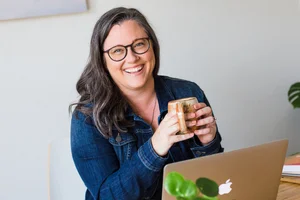
Hi there, I’m Kendra.
I’m a woman forever changed by loss and by the quiet clarity that followed. I walked away from the life I was “supposed” to want and began creating one that felt like home.
Now I work with women who are ready to reclaim their identity, their relational sovereignty, and their soulful leadership. The ones who are done shrinking and ready to start living in their truth.