
From the outside, your life looks ok. You’re managing life and grief. You’re functioning and getting things done.
But at night you lie in bed and wonder, is this the life I’m meant to live? Then the guilt rushes in and shuts it down.
In this episode, you’ll hear:
The deep inner nudge for a different life I felt after losing my daughter, and all the guilt that came with it
Why wanting something different after loss doesn’t make you ungrateful
The 2 places that guilt comes from
How you can grieve and live at the same time
1 small practice to try the next time the guilt shows up
Watch Video Now
If you’re feeling that pull right now and want to know what it’s trying to tell you, I’d love to talk with you.
Schedule a What Matters Now session. It’s a 90-minute 1:1 session with me. We’ll slow down, listen to what’s stirring underneath your grief, and get clear on what matters to you now.
Book your session today!
Listen to the Episode


Now, I’d love to hear from you! When the pull toward something different shows up, what does your guilt say back to you? Remember, share as much detail as possible in your reply. Many beautiful souls come here for insight and inspiration. Your story may spark a breakthrough for someone who really needs it.
Please put your thoughts and ideas directly in the comments. Links to other posts, videos, etc. will be removed.
Thank you from the bottom of my heart for adding your voice and experience to this community. You make it one of the most powerful and supportive places across the internet.
With endless love and appreciation,
Kendra 💜
-
Kendra: [00:00:00] If you're here, you've probably experienced some sort of loss, any kind of loss, and you have experienced all the complexities of what that means. The grief, the wondering what's next, what do I do now, the asking yourself why me, the big life questions, and then this deep sorrow. And somewhere mixed in all of that, there might also be something that you're feeling that maybe people aren't talking about a whole lot, and that's this inner stirring inside of you, [00:01:00] this inner pull toward a life that feels like it's right for you, a more meaningful life.
And maybe on the outside, your life looks fine. You went back to work, you're getting things done, you're functioning even though you've experienced all of this loss. You look like you're doing fine on the outside is basically what I'm saying. Like, if, like, people have maybe looked at you and said, "Wow, she's handling this really well.
She's coping really well. He's over it. He's moved on." But when you lay down at night, you wonder, you ask yourself this big question. You lay in your bed at night and you're about to fall asleep and you wonder - is this really all there is to life?
You've got this inner feeling of, um, discontent because your life doesn't feel like it fits you anymore, [00:02:00] and maybe you're realizing it now after the loss that maybe your life never actually fit you. You want something you can't quite name yet. You maybe haven't figured out what it is you want, but you know that you don't want this anymore.
You don't wanna live in a life that doesn't fit you anymore And then as you lay there in your bed at night, tell me in the comments if this feels like you, your brain starts going and all the thoughts - start coming and you say things, you hear things in your head like, "You have a good life.
Things aren't terrible. Don't rock the boat. I should be grateful for what I have." And you fall asleep at night and you do it over again tomorrow. I understand that feeling so much because I went through a period, if you are new here, I went through a, a pretty traumatic timeframe in my life where I [00:03:00] lost my daughter who was stillborn at 40 weeks.
Um, during labor we lost her, and then my dad passed away of a heart attack very unexpectedly six weeks later. And during that time, I found myself in deep grief, overwhelmed by all of the feelings, but also with this ridiculous urge to create a different life. And I started just four months after , going through this experience with wanting to create a vision board.
I had never wanted to create a vision board before in my life. I don't know why it decided to show up then, but I can tell you that something in that, the depths of my grief touched a part of myself that knew that I wanted to live my life differently and I wanted to show up differently. So I had this overwhelming urge to create a vision board.
I did. I needed personally something tangible to hold onto to see visually, and so I did create [00:04:00] something that I could hang on my wall. I put it at the end of my bed, and it was like a reminder to me every day that I wanted my life to look and feel like what mattered to me. Not everyone else, but what mattered to me.
What was aligned to my truth. The grief was still really raw, so I wasn't planning on taking any action on any of this yet. I just needed to get clarity around what mattered to me. And so I hung that thing at the end of my bed and fell asleep every night looking at it. And as time went on, I kept getting these thoughts of, again, this is our minds coming back in to, to try to protect us, but I had thoughts like, "Who am I to want these things?
If I start building a life I love, does that mean I'm leaving her behind?" Her being my daughter. What kind of mother dreams about a future when she's [00:05:00] lost a daughter? Grieving mothers aren't supposed to make these vision boards. They're not supposed to want to move on. They're supposed to be sitting in their s- they're not supposed to want to build a life without their daughter.
I had a lot of guilt and shame for all of these thoughts. I had a husband, a home, and people who loved me. Why couldn't that just be enough? All these thoughts. I'll give you a couple more. Maybe I don't deserve an amazing life. Maybe part of me is afraid that , if I go for that, maybe I lose connection with her.
There was so much guilt and so much shame with this desire to build a life that felt good that vision board still hung there every night for, I would say, at least a good year of my life. And then I've subsequently created new vision boards every year for my, for my own life. But, um, staying on point and staying in this topic and staying in that moment, it was a quiet reminder [00:06:00] asking me to keep dreaming.
And that's what we're gonna talk about today
So the first topic I want to address today is this concept of wanting more doesn't mean you're ungrateful for what you have. You know, one of the thoughts that came up for me was you should just be grateful for what you have. So our therapist did tell us not to make any big changes for the first year, which was solid advice.
Um, so I went back to the life that I had constructed before losing Adeline, my daughter, and my dad, and I was grateful for - what remained. I was grateful for the stability that we had. I had a loving partner, I had a stepdaughter, I had my family, and I appreciated the stability of all of that and the space to grieve.
- But that didn't negate this inner knowing, this inner pull that something big had shifted inside of me, that I knew I wanted something different for my life. And a lot [00:07:00] of this stirred around, for me, two things: quality of life and how I was living. So, um, and I won't get too deep in this 'cause I feel like it's kind of a sidebar, but, um, if you're into human design, I'm a projector, which means I need a lot of space.
. I need a wide open calendar, and I was working in a corporate job. I knew that corporate work was not going to be the future for me. I also knew I had this immediate desire to start sharing my grief story, and so I created, um, a blog and started writing. And so I knew there were those two things that were pulling
um, I didn't know yet what it would be, but I knew that I was feeling those pulls. I knew something had really shifted.
From the moment of not knowing Adeline to knowing Adeline and experiencing the death of my dad. I had these two things happening at the same time. I had this ache in my heart, not just for the loss, but also for the future I wanted to create for myself. I [00:08:00] had sensations of restlessness and tension in my chest, and
I knew there was something different out there for me. I just didn't know yet what that would look like
And I wanna be clear here that I'm not talking about, um, wanting material things. So, you know, I started this topic off with wanting more doesn't mean you're ungrateful. I'm not talking about wanting more material things. I'm talking about... And I don't even love the word more. Wanting something different is really maybe where I should have gone with this.
I'm not talking about wanting more material things. I'm talking about wanting to change how I lived so I could show up in my life differently. I wanted to change the environment that I lived in, how I took care of myself, how I worked, how, who I surrounded myself with, and how I served the world and contributed to the world.
I, um, very quickly after losing Adeline, we got a dog because I felt like I had [00:09:00] so much love to give and nowhere to give it. That kind of like, how do I wanna live my life? If you're anything like me and you've heard that not so helpful message of be grateful for what you have, that comment throughout our life, and especially for women, so if you're a woman listening to this, this might hit differently than if you are a male. But that message is how the world keeps especially women from wanting more.
They make us feel selfish. They make us feel ungrateful, and it convinces you that you should feel guilty about having big dreams and big desires and wanting something for your life. It teaches you that wanting or desiring is a negative, that something feels bad. And I believe that that statement was taught to us is incomplete.
Yes, be grateful for what you have, and honor your truth [00:10:00] or your desires or your passion or your inner pull or your inner wisdom. You can have both, and you can do both. Both can be true at the same time. You can be... I think this is one of the big things about life. Like, I think we think we have to live in these black and whites all the time.
We have to be grieving or joyful. We have to be, um, grateful and not wanting more. Um, th- these dichotomies and, and the big thing that I've learned from the losses that I've experienced is that two things can exist at the same time, and that is absolutely true for this. You can be grateful for the life that you have and still desire something different for yourself
There is absolutely something so important in our humanness to be grateful for what we have in our current moment. It's essential. And it doesn't negate your, I'm gonna say the word souls, your e- essence, your innermost [00:11:00] wisdom, your desires coming from that place. It doesn't negate those if you want to go explore and discover where it's guiding you to, because it's guiding you to what's the highest and best truth for you.
And you, you may have felt some of that before your loss. I felt like a twinge of it, but not a lot of it. I felt moments of it, but not a lot of it in my life. And in my case, the loss of my daughter ended up being what I would consider and the way I describe it is a doorway or a catalyst to me actually knowing that part of myself more than I ever had in my life
Uh, so the second thing I wanna talk about here is that when you have this inner pull alongside your grief, like I mentioned earlier, I had a lot of thoughts around, [00:12:00] like, feeling guilty or feeling shame around having those thoughts.
And I wanna talk about first how we got here. There are a few reasons why we might fall into a pattern of feeling guilty about longing for not just the person we lost or the thing we lost or the moment we lost or the situation we lost, but also for this longing for a different life,
and the two reasons that that can happen is comparison and then our cultural, I'm gonna use the word training, expectations, messages that have kind of put us in that box. So let's start off with comparison. So someone always has it worse than us, right? Yes, my daughter was stillborn. Yes, it was terrible and horrible and tragic, but I wasn't traumatized by someone else.
I wasn't [00:13:00] homeless ever in my life. I didn't have chronic disease. I looked at other people's lives. You know, I told you earlier in this podcast that I had a pretty good, stable family life at the time, and my life had the support systems that a lot of people didn't have. And so there was me comparing myself to others around me and going, "Girl, you don't have it that bad.
Others have it much worse than you. Like, life could be a whole lot worse. You should just be okay."
And maybe you feel like like guilty for feeling bad and wondering, does my grief really count? Especially if it's not something like the loss of a child. Maybe it's the loss of a friend [00:14:00] and you think to yourself, "Well, it wasn't my brother."
It-- This is what I'm talking about when I say comparison. You compare your grief to other people's experiences in grief, and then you discount how you feel or you discredit or you minimize how you feel 'cause you're like, "I shouldn't feel this bad." So we as humans have this tendency to compare ourselves to all of the other people in our world.
And with social media and all the, , news that we're exposed to, we just have a lot more visibility to how the world moves through life now that we didn't have 50 years ago.
It's called social comparison theory in psychology. And Brene Brown really explains it well in her book, Rising Strong. She says, "Even pain and hurt are not immune to being assessed and ranked." So we look at our grief and we assess it in comparison to other people's loss or other [00:15:00] people's expression of their grief, and we judge our own, and we rank it, and we say, "Well, mine isn't that bad.
My life isn't that bad." We compare our losses to other people, . we dismiss our own feelings about our own life and say that it's not that bad. So I want you to hear me when I say this, because I've said it in so many podcasts and I'll continue to say it over and over and over.
What you feel is real and valid, and Important for you to listen to and pay attention to, and not better or worse or less than or more than anyone else. It is just your unique experience, and that is real and valid. And so I just wanna leave that at that. You know, the second reason that we may feel guilty about longing, um, while we're grieving are also all these cultural messages that we've received throughout [00:16:00] our lives about all the things that I've said, like, "Be grateful for what you have.
Don't ask for too much. Take what you're given. Wanting is greedy." L- um, or that idea that I s- talked about, two things can't be true at once. You can't be grieving and living all at the same time, that life is some linear process, and you have to grieve all the grief and then grow, which is such bullshit.
Um, you will never stop grieving, and therefore, you can't wait to go live your big, beaut- beautiful, wonderful life. Um, when you feel called and when you feel like it's time and when you feel that pull, what I'm here for is to help you listen to it. The messages on how the world teaches us to listen to our wanting, um, a lot of it is, is that, especially again, for women, if you're a woman listening to this, let me know if this resonates with you, that wanting is a selfish act, that if we want more, [00:17:00] we are selfish, that you should feel guilty or shame about your wanting or your desires or your passion for something other than what you have right now, and that you can't, again, be grateful for what you have and want more or want different.
And I'm here to remind you that that little spark inside you, that thing that's pulling you towards something different in your life isn't wrong. It's not something to be ashamed of. It is typically your true self speaking to you from within, and it's really worth listening to. And it doesn't make you a bad person for wanting things while also experiencing, experiencing the emotional rollercoaster that is grief and loss.
Again, we can do both at, at the same time. You don't have to. I think the other caveat to this all is, and I said it just a few minutes ago, but I'm not saying that you should do both, okay? I [00:18:00] don't should on people. I'm saying that you can do both. If you feel that pull and wanna go that direction, you can.
And again, that's what I do. That's what I support people through. Okay, so the last kind of topic here that I wanna roll through is this idea that you can grieve at the, and live at the same time. And I've mentioned it already, but I feel like it's important enough that we need to have, like, a full-blown conversation about it.
Because sometimes, a lot of times, a lot of people feel so guilty for wanting to live their lives again, to feel alive in their own lives. It feels like you're betraying what you've lost, whether that's someone or something or even a past version of yourself.
If you feel joy, does that mean that you are moving on and forgetting or leaving something else behind? And, and And what do we do [00:19:00] with those emotions when that feeling comes up? So I don't like the idea of moving on. Um, I talk about moving forward instead. I always say, and I said it already in this podcast, that we carry our grief forever.
I don't think grief is an endpoint, so if that's true, we can't allow ourselves to wait for the grief to be over to feel alive again in our lives. And one does not outweigh the other. It doesn't have to be one or the other. It doesn't have to be, "Oh, I'm so alive and I'm not grieving anymore," or, "Oh, I'm, I have to be in this depth of this sorrow and I can't feel joy at the same time."
It may not happen in the same moment, but it can happen in the same day, and it can happen in the same week, and it can happen in the same year. It doesn't have to be grief first and then feel alive. It all is intertwined. Our lives are complex. If you feel that stirring underneath [00:20:00] your grief or within your grief, you don't have to wait.
You don't have to arrive at some destination before you start just exploring it. Like I did, I created a vision board. I didn't even do anything with the vision board for a year, but I created it because I wanted to explore and get curious about what all that was that was coming up for me.
That inner pull is not a nuisance. Sometimes we think it is. Sometimes we're like, "What the hell? You want me to go do what?" It is the truest part of ourselves trying to get our attention. So what can you do when these feelings of guilt show up in your life?
That inner pull isn't a nuisance. It is the truest part of you trying to get your attention. So what do you do if you start to feel all these, um, voices in your head come up?
My [00:21:00] recommendation is to flip the script just a little bit. So say both halves out loud, and then swap the but for an and. So I am grateful for this, and my desire is for that. Or I feel guilty about this, and I want that
It creates a validity to this duality of life, to this complexity of life when you put an and statement in instead of a but or you end the statement. Like, you know, we talk about gratitude journals all the time, like, "I'm grateful for, I'm grateful for." Um, I understand the concept of them. I don't personally love them, um, because I can't gratitude my way into not feeling the complexities and the depth and the full range of emotions that I have in a regular daily basis.[00:22:00]
So the, "I am grateful for and," helps me to validate all of my experiences in life and listen to and honor both sides of the coin. Not the, "I'm grateful for this, this, this, and this," or the, "I'm grateful for this, but," that cancels out the other half. The and lets both of those statements be true at the same time, which in my opinion is like if we can learn to, to hold space for both in our lives, man, it just creates so much more, I think, alignment to our humanness because we are not one or the other.
We are not happy or sad. We are both. We are not, um, angry and joyful. We are both. We may not be in the exact same moment because you can only be one in, in an [00:23:00] instant, but you can move from one to the other pretty quickly. You can be both.
And as you do that, as you create those statements Notice what happens in your body when you hold space for both of those at the same time. So when you say, "I am grateful for X and my desire is for Y
Say that over and over again, and then just notice what happens in your body when you say it
All of this really just allows you to, yes, in the moment be grateful for what you have, but also to fold your desires into your life, into your daily practices, rather than just putting them in a drawer or on a vision board like I did. It's an integration of the two
So I will leave you with this. There is nothing wrong with wanting something different for your life while also still grieving [00:24:00] a loss. And you don't have to want something more while grieving a loss. But if you do, you can explore it while you're grieving
And healthy grieving moves back and forth between facing loss and then rebuilding your life. No one stage comes after the other. I know we talk about it all the time, there are stages of grief. But it is complex, and it is definitely, um, an, a flow. It is a flow. And this is an opportunity to integrate that flow into your daily life.
So if any of this feels like you right now, I do have a session that I'm offering right now. It's called What Matters Now. It's just an opportunity for you to, while you sit with your grief, explore what matters now to you right now. Where is that inner [00:25:00] pull?
What is it saying to you? How do I start witnessing it? How do I start listening to it? How do I start connecting to what that inner pull is trying to say to me? That's what that session is about. I'll put a link below so you can grab that if you want.
It's with me. It's one-on-one. It's not a recorded. It's an hour and a half long, so it's really, um, an in-depth se- session. If you want to grab that, I would love to talk to you
[00:26:00]


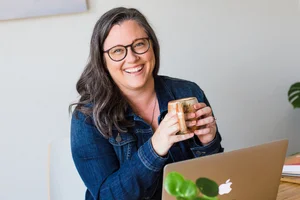
Hi there, I’m Kendra.
I’m a woman forever changed by loss and by the quiet clarity that followed. I walked away from the life I was “supposed” to want and began creating one that felt like home.
Now I work with women who are ready to reclaim their identity, their relational sovereignty, and their soulful leadership. The ones who are done shrinking and ready to start living in their truth.