Feeling Stuck in Life? Here’s Why Small Shifts Matter More Than You Think
The Post That Got Under My Skin
I saw a post the other day that got under my skin.
Here’s what it said:
“I love nervous system tools—they’re life-saving, but they aren’t life-making. They can’t fix a job that’s draining you, a relationship that hurts you, or a lifestyle that goes against your values. Sometimes healing means changing your environment, not just calming your body in it.”
I agree with the sentiment. But the dismissive tone bothered me—because so many of us are doing the best we can to regulate our nervous systems inside the reality of our current lives.
Sometimes, making big, dramatic changes just isn’t possible yet. Maybe you’re feeling stuck in life—holding so much on your shoulders while trying to keep everything moving. You want to make meaningful shifts, but right now, small steps to change your life are all you have capacity for—and that matters.
The truth is, even when those larger shifts are out of reach, the smaller, quieter ones still matter. Every moment of regulation is a seed—laying the groundwork for a life that’s more aligned, even if it doesn’t look that way yet. 💜
As someone who spent a decade navigating loss, corporate pressure, and survival mode, I know firsthand how nervous system regulation quietly reshapes a life.
Why We Stay Stuck
Most of us aren’t stuck because we lack the courage to make big changes.
We’re stuck because the systems around us are designed to keep us where we are.
They whisper: Just keep going. Push through. It’ll all be fine.
Posts like this bother me because they put all the responsibility on the individual to make massive life changes—without acknowledging how hard it is to do that inside systems designed to keep us constrained.
It’s the unpaid parental leave that forces you back to work before you or your child are ready. It’s the lack of affordable childcare that turns every logistical decision into a stress equation. It’s cultural expectations that glorify burnout as success.
Yes, personal responsibility matters. But so does compassion and understanding for current circumstances, cultural norms, and systemic barriers. We didn’t get here alone—and we can’t always climb out alone.
My Decade of Regulating
Another reason this post bugged me was because it made it sound like if all you’re doing is making tiny choices, you’re not life-making. That hurts my heart.
If all you can do right now is make tiny choices, that’s OK.
I knew for ten years that I wanted to leave my corporate job and build my own business.
But in that decade, life handed me:
The stillbirth of my daughter
The sudden passing of my dad
Layoffs and job insecurity
Losing my father-in-law
My stepdaughter’s mother passing—and her moving in with us
Oh, and COVID… with an 18-month-old at home
Through it all, I always knew big changes would come, but the timing wasn’t right.
We were dealing with big, real-life things, and because I had limited support from the systems around me, I was in survival mode for nearly a decade.
The systems of support here in the U.S. for someone who’s navigating grief, loss, and life-altering change are nil. There’s limited compassion. There are certain people—humans I’m immensely grateful for—but our policies don’t support healing.
Like when my stepdaughter’s mom passed and I needed to take a month off work. My leader supported it, but it was completely unpaid. No financial support to adjust to a child moving into our home. We did it, but there are so many people in this world who aren’t able to do that.
Through the last decade, I needed to keep my corporate job to pay the bills and because starting a business takes mental and emotional energy that I just didn’t have at the time.
Why Nervous System Work Matters
So no, I couldn’t make the big life change I knew in my heart I wanted.
But that doesn’t mean I wasn’t “life-making.”
Sometimes the only thing available to us in the moment is regulating our body inside the reality we’re in.
When I talk about “nervous system regulation,” I mean simple, grounding practices that help bring your body out of stress and back into steadiness. I used to go to yoga class, write in my journal, meditate, do breathe work before that next meeting I didn’t want to attend—not to fix anything, but to acknowledge to my body that I understand it’s hard and we can still show up knowing we won’t be here forever.
Each time you notice dysregulation and use tools to regulate, you open a doorway.
And that doorway matters.
Every tiny shift is preparing you for what’s to come.
Big decisions are rarely made from a place of overstimulation and exhaustion. We must first learn to regulate in our current circumstances; only then can clarity and inner knowing surface.
Those small moments of regulation can open a window to the soul, give us a break from survival mode, and allow small, aligned choices to emerge. Those small choices build the ground where big shifts become possible.
You Are Life-Making
So if you’re in the thick of it right now,
Take a deep breath and give yourself a break.
You didn’t get here alone.
And please hear me when I say this: you are life-making.
Every conscious breath, every time you regulate, you’re building a foundation for change. It might not look dramatic yet, but it’s happening.
Sometimes the bravest thing we can do is accept where we are and work within it. That’s not failure—it’s wisdom.
I see now that I wasn’t ready to leave my job a decade ago. I still had growth ahead of me. And because of that, I can show up now—in my work, and for you—in a much more meaningful way.
If you’re ready to start weaving more of these small, regulating moments into your day but aren’t sure where to begin, grab my 10-Day TrueYou Reset. It’s a gentle way to create that foundation. Over ten days, you’ll slow down, tune in, and return to yourself. You’ll gently let go of the feeling of “never enough” and walk away lighter, clearer, and more grounded.


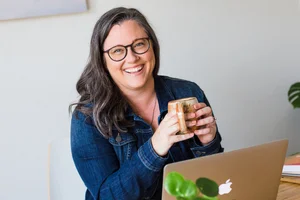
Hi there, I’m Kendra.
I’m a woman forever changed by loss and by the quiet clarity that followed. I walked away from the life I was “supposed” to want and began creating one that felt like home.
Now I work with women who are ready to reclaim their identity, their relational sovereignty, and their soulful leadership. The ones who are done shrinking and ready to start living in their truth.